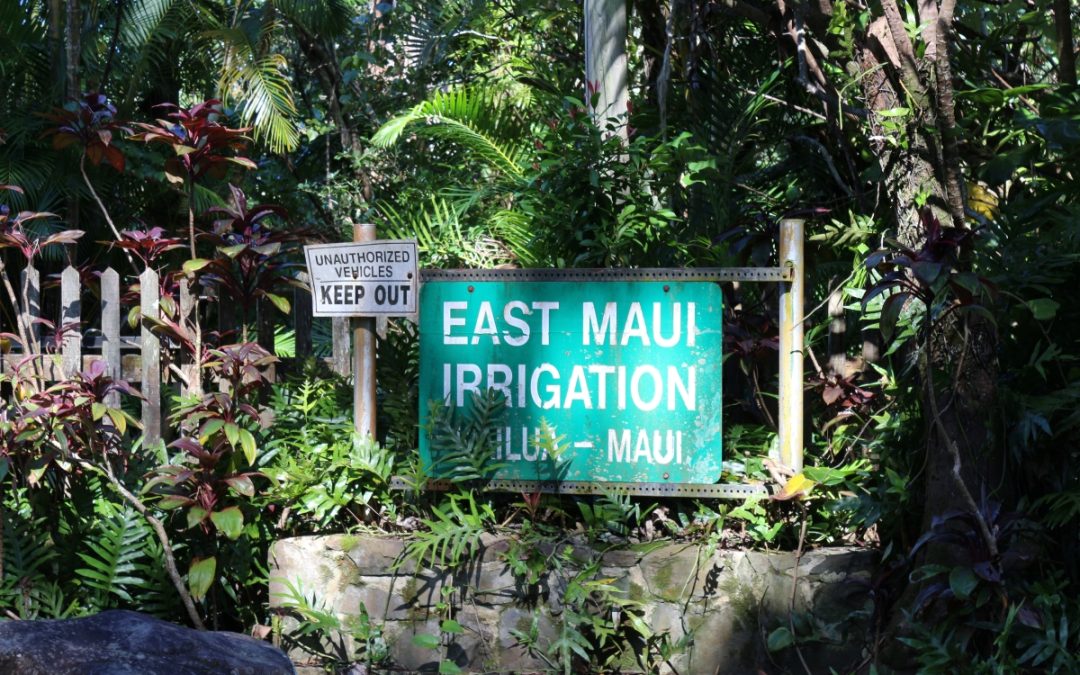

The state, which oversees parts of a miles-long ditch system that delivers water from East Maui, proposed new solutions in preparation for its board meeting slated for 9 a.m. today (weather permitting).
Item D-7 attempts to authorize a public auction for a water license for certain surface waters in East Maui, while also seeking approval of a separate water license to Maui County for domestic, municipal and agricultural purposes, and a related delegation concerning an agreement for the operation, maintenance and monitoring of the East Maui Irrigation System.
The announcement comes at a critical moment, as the county works toward acquiring local water systems.
Water advocates say the move undermines the county’s efforts to take control of these systems, while Mahi Pono representatives are viewing it as a compromise.
“In proposing two separate licenses, we feel that the BLNR staff has offered a solution that provides secure water for agriculture in Central Maui, while also providing the County with a direct agreement with the State to exercise control over its municipal and agricultural water allocation,” Grant Nakama, Senior Vice President of Operations of Mahi Pono, said. “Under this structure, the County’s municipal needs would continue to be prioritized over Mahi Pono’s irrigation requirements.”
Jonathan Likeke Scheuer, lawyer, Ph.D., author, water expert, and vice chair of the East Maui Water Authority’s Community board ‘Aha Wai O Maui Hikina, disagrees.
“It’s very serious,” he said of the state’s action.
Scheuer describes the 100-plus page document released alongside the agenda item as “complicated” and “convoluted.”
The Privatization of Water
In Hawaiʻi, water is a public trust resource.
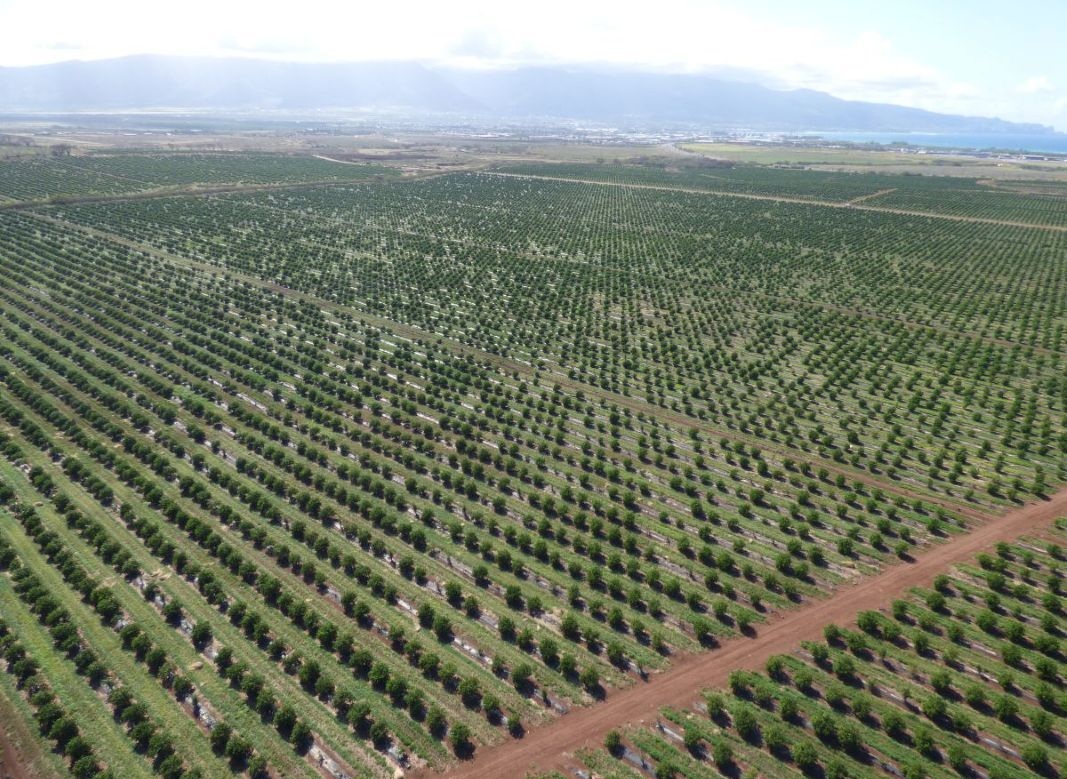
For years, Mahi Pono has pushed for a 30-year lease from the state for the water system to fulfill its farming commitment on the island. The area was previously operated by Alexander & Baldwin for 150 years, but today, it is under new ownership – an agricultural company jointly owned by California-based Pomona Farming and one of Canada’s largest pension funds, PSP Investments.
While the newly established authority has made attempts at finding common ground among the different parties to help serve water and support residents and agriculture on the island, challenges continue amid looming lawsuits and public disagreements.
Lucienne de Naie, a longtime Sierra Club supporter and water and environmental advocate, says she sees the water authority as the solution. “I see the water authority as a neutral authority,” she said. “They have to serve everyone’s interests. This isn’t really about who is farming what on how many acres; this is about partnerships.”
She’s also concerned with the lack of management and upgrades needed to support the aging system. “There should be a new partner that actually upgrades and manages that system for the benefit of their operation and everybody else,” she said.
According to a 2020 report from the United Nations, the privatization of water and sanitation services may pose risks.
The report states that the delegation of public services, such as water, has been supported through arguments that the private sector may help provide adequate services and efficiency. However, the report notes it may come at a price, with“notable social and political opposition, cemented in evidence that it brings more inequality and poverty; thereby jeopardizing the realization of human rights.”
The report goes on to mention other issues related to private ownership, including the possibility of rising prices, a lack of transparency in oversight, and accountability. And while some may look at it as an opportunity to reduce the role of the State, that might not always be the case either. The report references the pandemic, for instance, when times of economic instability require State intervention.
The document also mentions the impact of investment funds and reads, “from the human rights perspective, the financialization of the water and sanitation sector creates a disconnect between the interests of company owners and the goal of realizing the human rights to water and sanitation.”
Kyle Nakanelua, a taro farmer and chair of ‘Aha Wai O Maui Hikina, says that is one of his concerns. “This investment benefits them (Mahi Pono); it doesn’t benefit Hawai’i citizens,” he said.
Shay Chan Hodges, who served on the Maui County Board of Water Supply, is also concerned. “They have to earn a return, and they have to earn a return in a certain amount of time,” she said, referring to Mahi Pono’s model. “So obviously they have to do whatever it takes for them to make money, as opposed to municipal or state government, which serves a different purpose.”`
On Maui, the issue is especially sensitive.
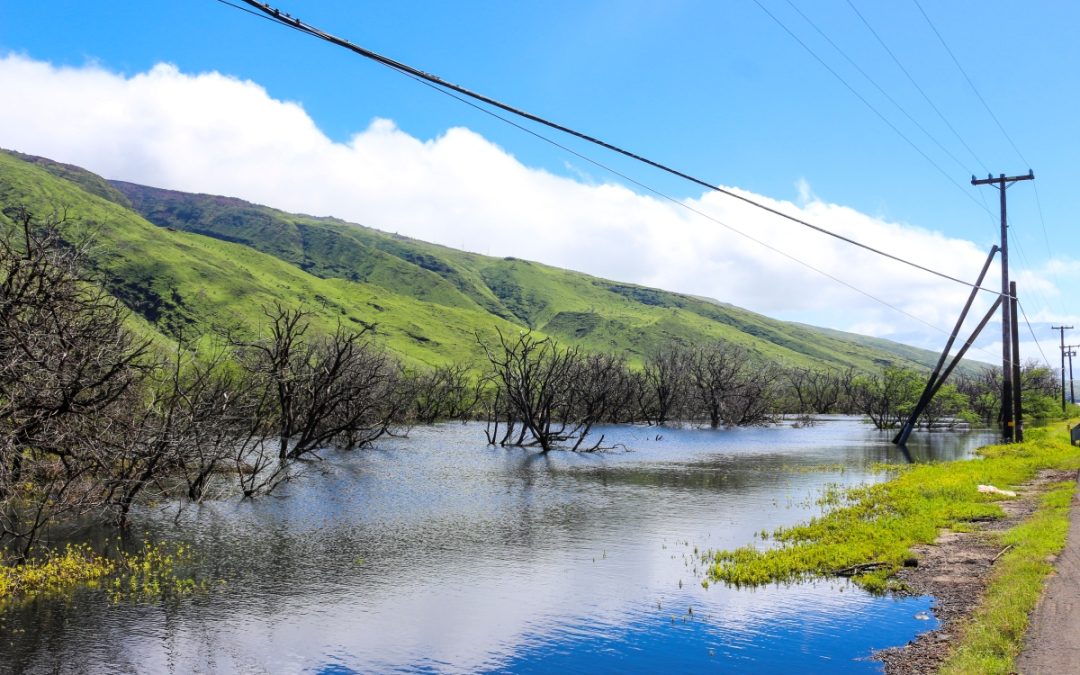
After 150 years of ownership by Alexander & Baldwin, the establishment of the water authority gave hope to the people and communities of the places affected the most — Ke‘anae, Nāhiku and other areas in East Maui. Water diversion left little to nothing to support loʻi kalo and the surrounding ecosystem, causing substantial damage to the communities that stewarded these areas for generations.
The state’s announcement has prompted activists and concerned residents to organize a sign-waving to be held during the board meeting at the J. Walter Cameron Center in Wailuku, where public testimony may also be given on the matter.
The public may testify or attend in person on Oʻahu at the Kalanimoku Building in the Department of Land and Natural Resources Boardroom at 1151 Punchbowl Street on the 1st Floor, or virtually via Zoom, Meeting ID: 847 9071 1512.