This article was updated on April 9, 2026 at 8:10p.m. to include the cancellation of the BLNR meeting originally scheduled for April 10, 2026, due to severe weather conditions.
Nāhikū resident Moses Bergau Jr. sat by the entrance of Ke‘anae Uka after a meeting led by the East Maui Water Authority, where residents had just learned they may be subjected to another contested case hearing.
Described as “a proceeding in which the legal rights, duties, or privileges of specific parties are required by law to be determined after an opportunity for agency hearing” under Hawaii Revised Statutes (HRS) § 91-1(5), contested case hearings are not uncommon for controversial topics.
The announcement, however, sparked some confusion that night for East Maui water advocates, who have fought for decades to support community-led stewardship of an essential water system previously owned by Alexander & Baldwin and now under the Canadian-funded agricultural company Mahi Pono.
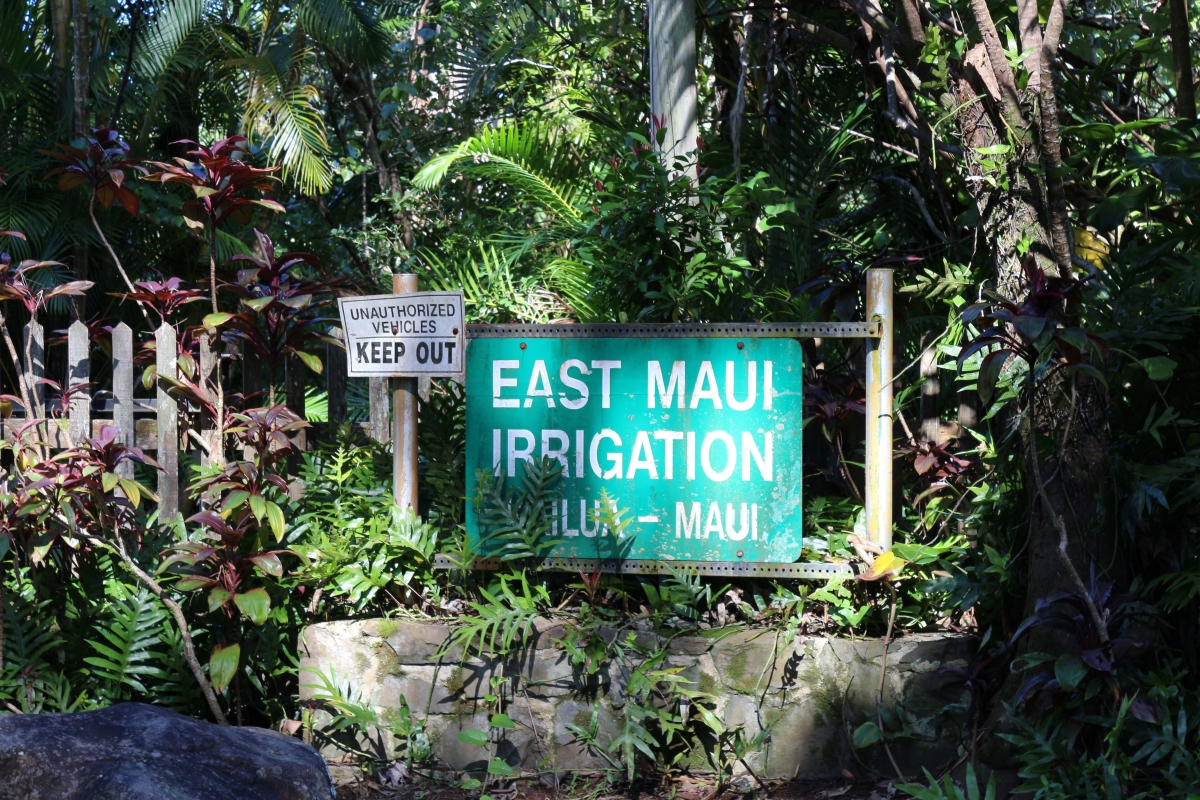
The land board, which currently oversees the lease for East Maui Irrigation – a large water infrastructure system that supports both residential and agricultural use on Maui – is now considering its own contested case, which Gina Young, East Maui Water Authority Director, said is a new process.
“Normally, you have one party that appeals to a decision made by the board; they’re suggesting that the board itself initiate a contested case and that a hearings officer evaluate who should get the lease. It’s not been done before,” she said.
A member of the crowd asked Young if the contested case was the same as the one involving Nā Moku and how that would impact the process. She replied:
“Separate processes, separate decisions, separate cases,” she explained.
“One is an appeal of an existing decision made by the board, one that most recently came out is questioning their authority to actually give a long-term water license, and what the board is recommending for us is different from those decisions and is to start a brand-new legal process that is going to have a hearings officer make a recommendation to the board as to who should get the water rights.”
Some members of the public were concerned about that decision.
Bergau Jr. said such an act is “not very productive” and may perpetuate conflict.
Young empathized with concerned residents, reiterating that “nowhere else in the country do you have to ask a private company for public water.”

She added that in the meantime, the county is still negotiating with all parties involved, including Mahi Pono.
“We’re working to understand each other and what our positions are. We’re mandated by law to negotiate to the fullest extent, should we go into an eminent domain proceeding, so we’re making sure we’re making a full faith effort in which to negotiate directly with them. And we’re trying,” she said.
They are also hoping a House resolution (H.R. 168), which is moving through the Legislature, will help support the process. The resolution essentially urges “the Department of Land and Natural Resources to prioritize issuing a set-aside to the County of Maui through an executive order by the Governor to support the management of public trust resources in East Maui.”
Still, the announcement came as a familiar disappointment to a community that’s struggled for generations to raise awareness about the challenges they’ve faced while water has been controlled, diverted, and managed by a private company for over a century.
“I can only say what I’ve experienced in my lifetime. The stress and aggravation come from generations. I was born with it. A lot of my generation was born with it. So it’s hard to make a distinction; it’s very hard to make a distinction. Does it hurt? Of course it does. That’s why we’re here,” Bergau Jr. said.
A request for comment from Mahi Pono was denied. DLNR did not provide a comment by the deadline.
The state land board meeting was previously set for 9 a.m. April 10, 2026 and was canceled due to severe weather conditions. A new date has not yet been set. The April 10, 2026 cancelled agenda link is available here.