Photo Essay · Environment
Native Plants Have Resilient Roots
How a native Hawaiian plant nursery and its network confront invasive pests and extreme weather to put native species back where they belong, from backyards to watersheds.
Cover: Rick Barboza in a greenhouse at the Hui Kū Maoli Ola nursery. Photo by Zak Noyle.
In February 2026, flash flood rains pelted some areas of Oʻahu for almost six hours straight, turning streets into rivers. On the Windward side of the island, the Haʻikū stream that flows near Hui Kū Maoli Ola native Hawaiian plant nursery more than doubled in width.
When torrential rains flush down the Koʻolaus, the health of an entire ahupuaʻa is put to the test. Hui Kū Maoli Ola co-founder Rick Barboza has seen it many times, and knows there will be more storms to come. But in the uplands, that’s where the magic can happen: local conservationists are proving that native plant restoration is the ultimate tool for watershed defense.
“Native ecosystems are the best for mitigating storm events,” says Barboza. “Being we are on the upper reaches, it’s the beginning point of healthy returns from our ʻāina.”
Native forests act as “better sponges” that absorb rainwater to replenish our groundwater, while lower wetlands catch sediment and runoff to protect the ocean, he explains.
“We’ve seen this on numerous occasions where either created wetlands or even loʻi do a great job at capturing soil before it enters our streams or oceans,” he says.
Native Hawaiian plants are thriving again in the Heʻeia region and throughout the entire ahupuaʻa, from the Koʻolau mountains to Kāneʻohe Bay, thanks to decades of effort put in by a local network rooted in shared values and friendships.
Hui Kū Maoli Ola is located at the center of the Heʻeia ahupuaʻa, tucked next to a residential neighborhood in the inner valley.
What started as a backyard hobby became a major operation producing about 200,000 plants a year for commercial sales and community restoration projects.
The nursery cultivates more than 100 native species and sends them upstream and downstream: Plants go to the nursery’s educational partner nonprofit, Papahana Kuaola just above it, to the kalo-producing Kākoʻo ʻŌiwi in the midlands just below it, and to Paepae o Heʻeia, an 800-year-old ancient fishpond at the shoreline.
At each level, community-led efforts are demonstrating how restoring native forests can help strengthen the watershed in Hawaiʻi and elsewhere.
Hui Kū Maoli Ola and Papahana Kuaola have sent their native plants across the state, logging more than 300 acres restored throughout Oʻahu, Maui, Hawaiʻi Island and Kauaʻi.
The work is not without major challenges, such as vicious invasive beetles, pesky moths and tree-killing diseases. And despite an overall downward trend in rainfall in the Hawaiian islands over the past several decades, 2026 proved to be a record-breaking wet year.
The persistent storms, flash floods and hurricanes kept the nursery from some of its typical planting activities. But the Hui Kū Maoli Ola team and partners at Papahana Kuaola are charging forward, finding new creative solutions and sticking to their mission to put native plants back in the ecological zones where they belong.

Located in the kula (midland) zone at the base of the Koʻolau mountains on Oʻahu’s Windward side, the Hui Kū Maoli Ola nursery headquarters and its two sister nurseries make up the largest Native Hawaiian plant nursery in the state that sells its plants to the public.
Rick Barboza, at right, and his business partner Matthew Kapalikū Schirman and their team have dedicated more than 25 years of sweat and time to restore native plant species through the commercial nursery and its landscaping design services, with the mission to restore native habitats throughout the Heʻeia ahupuaʻa and beyond.
“If people can just take an inventory and have an understanding of what is Hawaiian and what isn’t Hawaiian, and be able to take an inventory of what they have existing, and try to focus on propagating and growing out the things that are currently there to increase those numbers, then you’ll get the easiest results,” said Barboza.

As a zoology student at the University of Hawaiʻi, Rick Barboza deepened his appreciation for Hawaiʻi’s special native birds and plants. Hawaiʻi’s lowland dry forest ecosystem, which is where the most native plant, bird and insect species were once found, is also the most threatened type of ecosystem in Hawaiʻi, since that is where modern human development has concentrated.
“So many of our species have gone extinct, which is why we are the extinction capital of the world, but we can actually use that as our primary starting point to begin the best type of restoration work that there is,” he said.

Joshua Agua wheelbarrows a set of native seedlings through the nursery. Initially, Barboza says the nursery had to confront a stigma among customers that native plants were not as beautiful as other colorful and flashy non-natives on the market.
Today, Hui Kū Maoli Ola’s flowers, ferns, grasses, shrubs, and trees are sold at local family-run stores as well as big-box retail outlets. The success of the business allowed the organization to expand its physical footprint to multiple locations on Oʻahu, beginning in Waimānalo, expanding to Kāneʻohe and most recently, the North Shore of Oʻahu.

Pōhinahina, an indigenous beach-growing shrub with striking purple blossoms and strong roots can help to stabilize shorelines from erosion. Its fragrant silvery-green leaves are often used in lei poʻo, or head lei.
Its mashed leaves may treat irritated skin, and a tea brewed from its leaves could heal headaches or stomach pains, according to traditional Hawaiian medicine, or Lāʻau Lapaʻau.
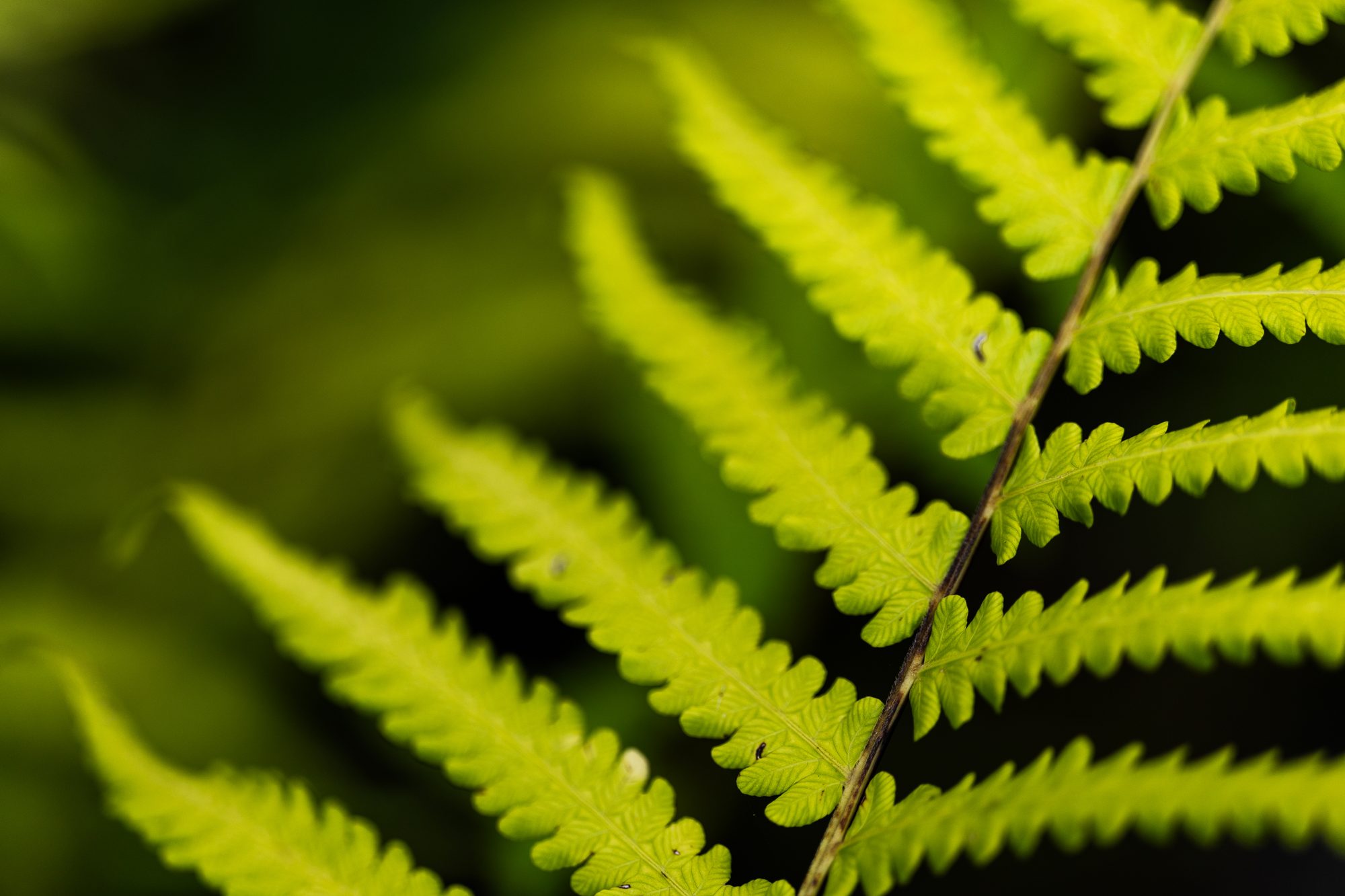
There is a distinct Hawaiian understanding of life and its connection to ʻāina: Plants, animals and elements are considered earthly forms of deities and ancestral spirits.
The delicate and lace-like palapalai fern pictured is considered a kinolau, or physical manifestation of Laka, the sacred Hawaiian goddess of hula.
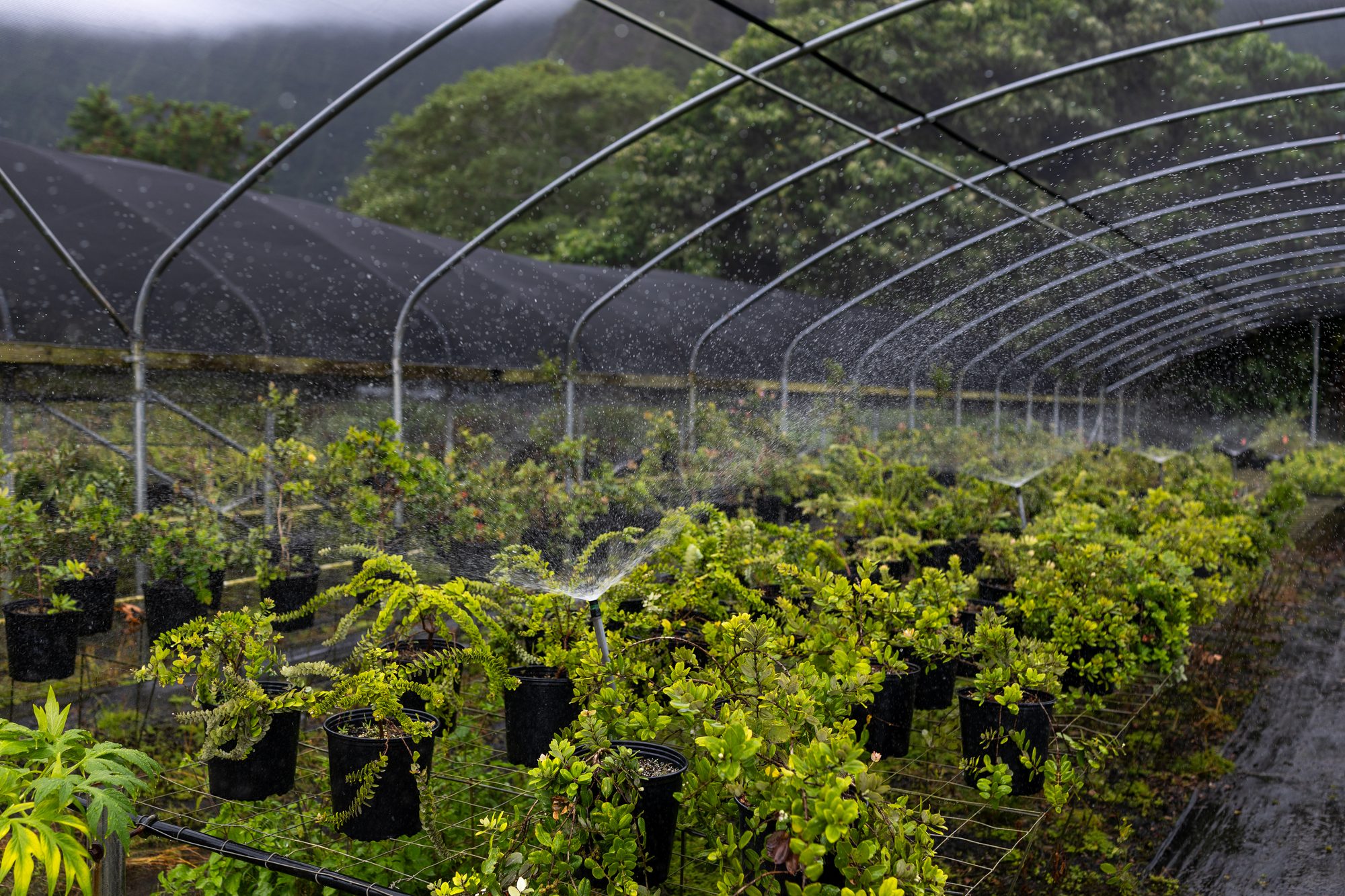
A greenhouse filled with young ʻōhiʻa lehua receives a morning shower.
Any activities conducted at the nursery and its adjacent property above it can affect those downstream, especially after a storm. To have a minimal negative footprint, water from the greenhouses is funneled underground to a bioretention swale designed to filter stormwater runoff.
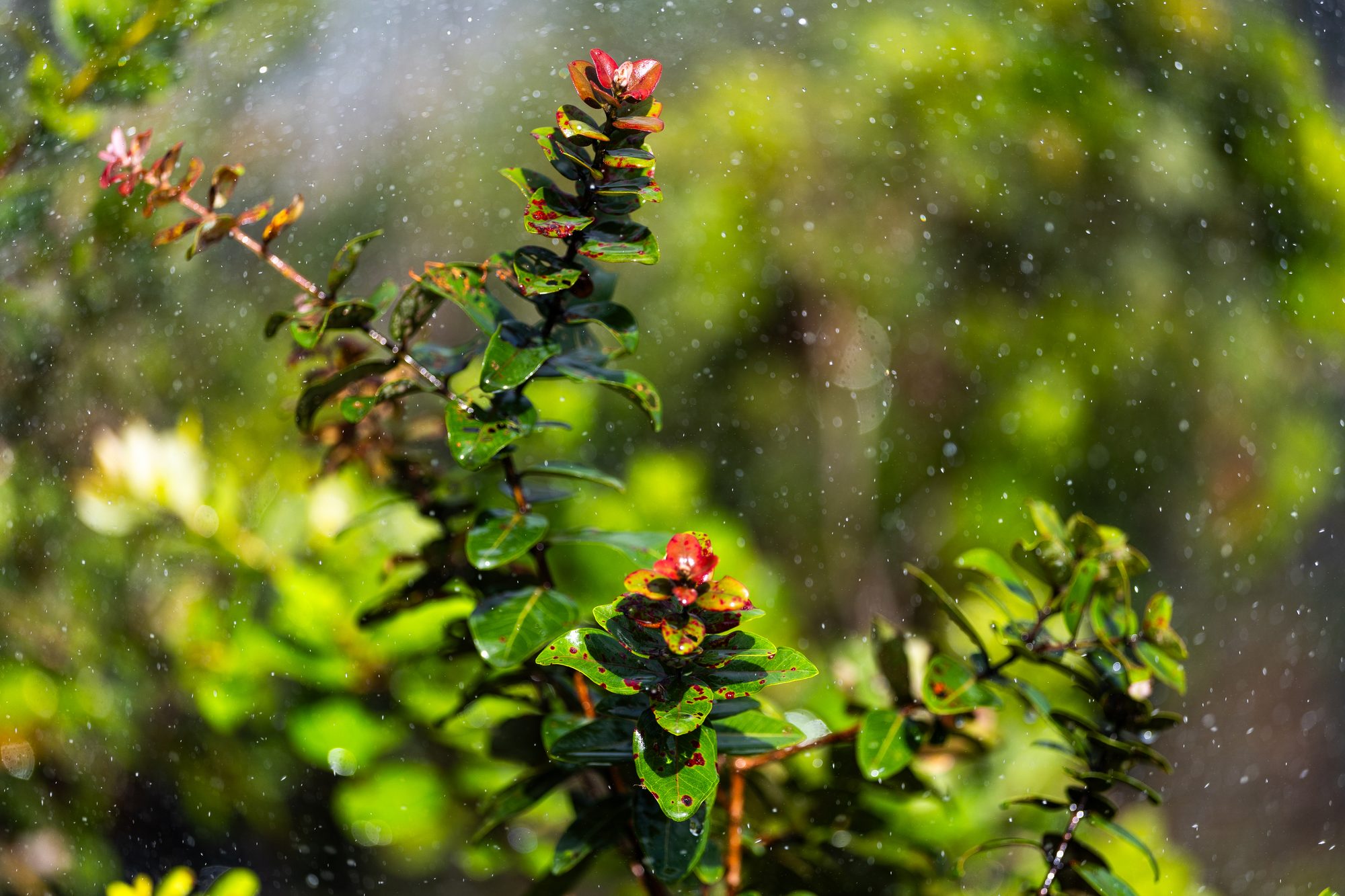
The native ʻōhiʻa lehua, one of the most popular offerings at the nursery, is a big player in bringing back native plant communities. It can be coupled with other native groundcover plants and shrubs to flourish again.
“We can’t just focus on one individual plant species, just like one organization can’t necessarily focus on themselves, or each individual can’t focus on themselves,” Barboza said. “In order to have community, we all have to be working together.”
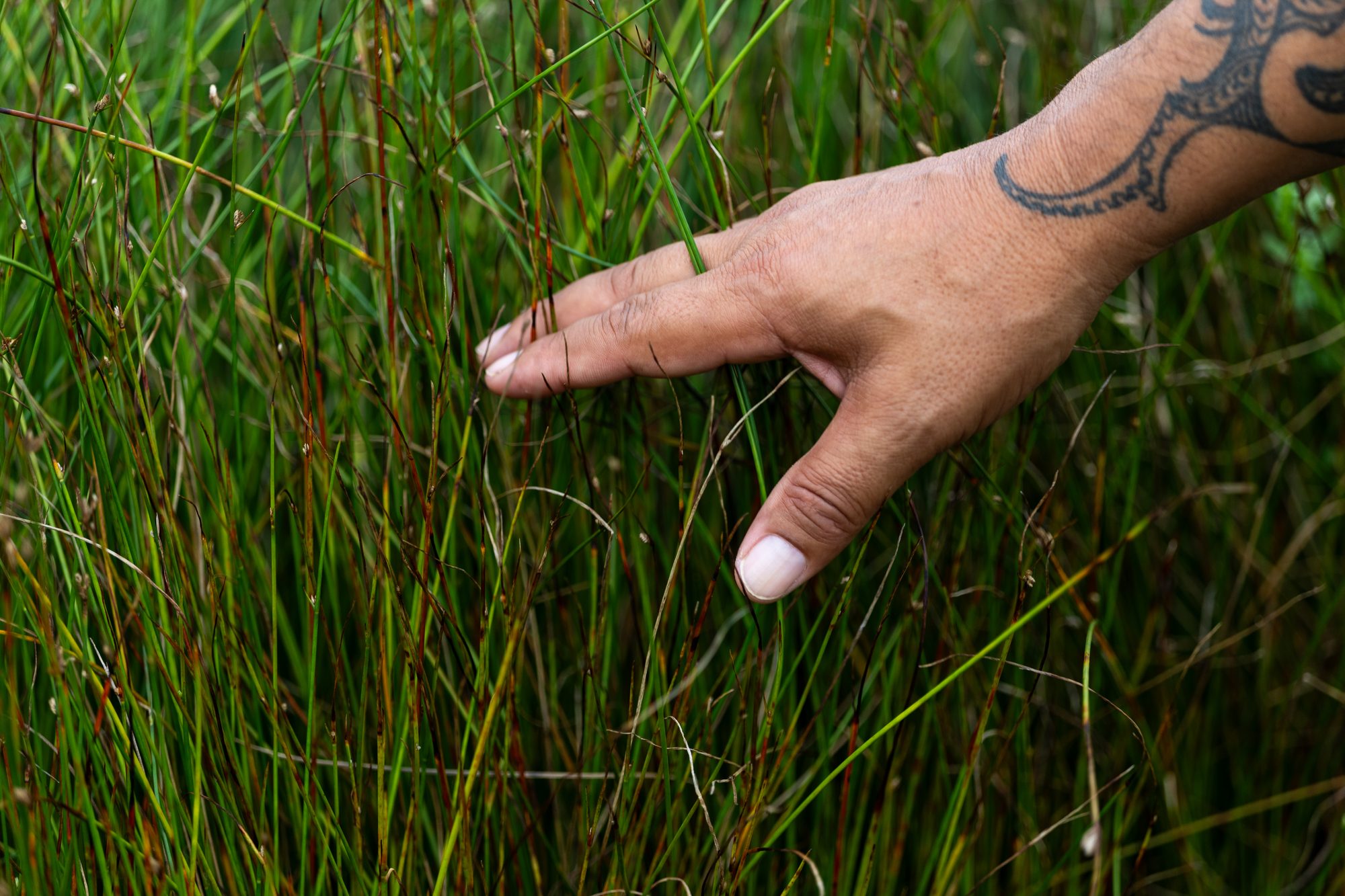
Hui Kū Maoli Ola nursery staff sent some makaloa, an indigenous Hawaiian sedge traditionally used to weave mats, to Paepae o Heʻeia to plant at the shores of an ancient Hawaiian fish pond. Today, makaloa fills the marshes where invasive mangrove had once dominated, and native Hawaiian waterbirds like the ʻalae ʻula (Hawaiian moorhen) and ʻalae keʻokeʻo (Hawaiian coot) are happily making a comeback in the habitat it provides.
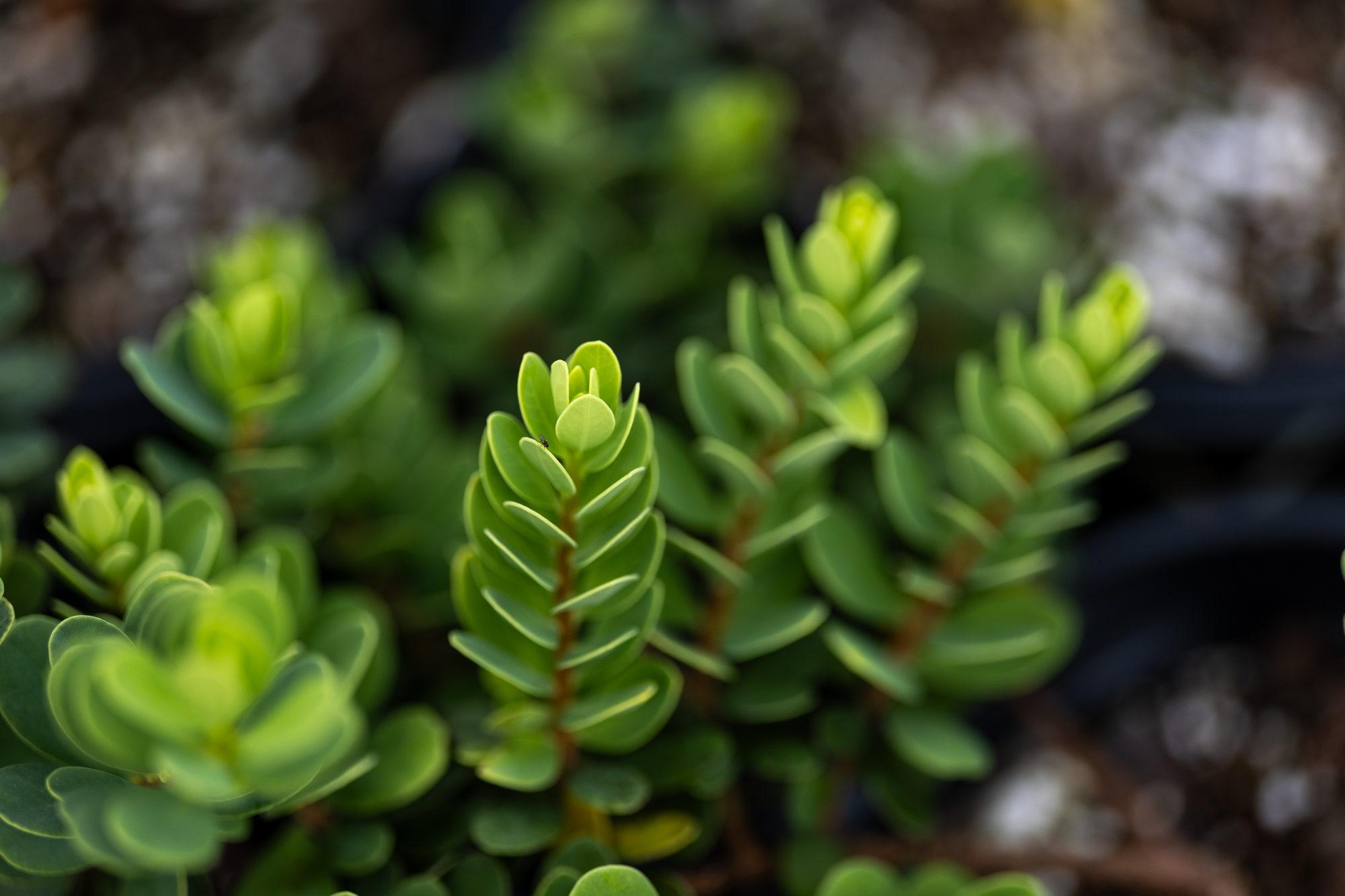
The roots of ʻākia, a native shrub, can help to prevent erosion, especially in areas prone to flooding.
Ancient Hawaiian fishermen would use its poisonous properties to their advantage by using a concoction of mashed roots, bark or leaves to temporarily stun fish hiding in tide pools or the reef. ʻĀkia’s natural toxins, which target cold-blooded animals, would draw the fish up to the surface.
ʻĀkia fibers were also woven into rope.

ʻŪlei is not as delicate as it appears. Its largest woods were traditionally used to carve tools or weapons. Today, the shrub can be utilized as a shield against heavy rain by retaining soil moisture and anchoring hillsides to prevent erosion into streams. It can be found growing at sea level and as high as thousands of feet in elevation.
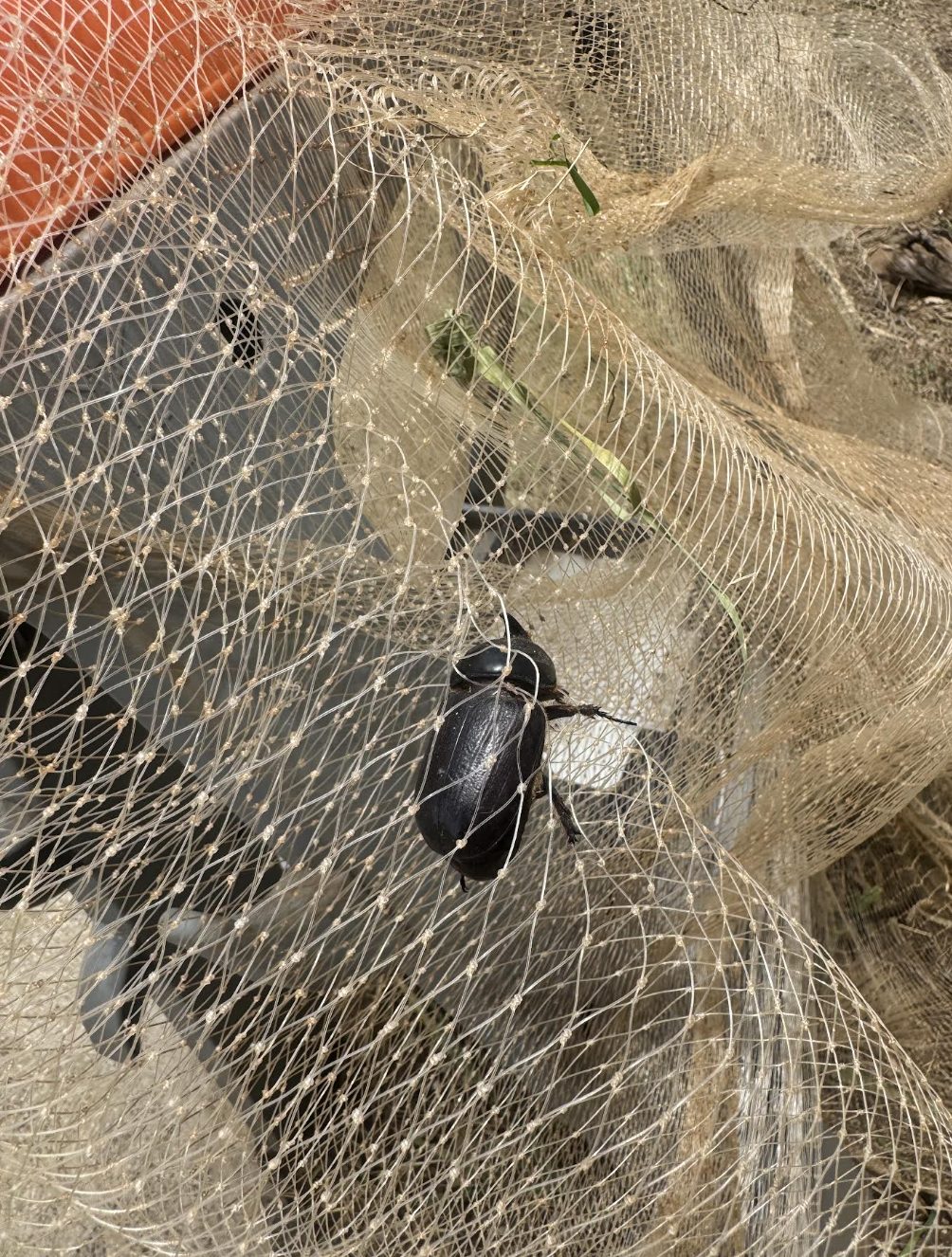
The Coconut Rhinoceros Beetle, caught in a trap of fish net created by Barboza, was first detected in Hawaiʻi in 2013 and has made its mark as one of the most catastrophic pests in the islands. By boring deep into the palms, the beetle exposes them to fatal infection.
Barboza called the situation “beyond sickening.”
Barboza has noticed the beetles snacking on other crops like ʻulu, or breadfruit, and even kalo, although coconut and palm trees are the beetles’ preferred food.
To combat the situation, Barboza and his team are experimenting with making traps of fishnet and amber and UV light, using amber light as a deterrent to keep the beetle away from target plants. Barboza feels that using light is more effective for the night-time pest compared to mulch or pheromone traps which might inadvertently encourage breeding and greater spread.
Photo by Rick Barboza

Barboza chats with Phillip Kapu at Papahana Kuaola. He credits the success of ongoing collaboration throughout the ahupuaʻa to the lasting relationships and connections he already had with others who are doing conservation work in the valley and at the shore.
“We were either classmates, or friends, we come from different schools, but we all kind of knew each other and for whatever reason, we all got placed in this ahupuaʻa which allowed us to gel even better,” he said.
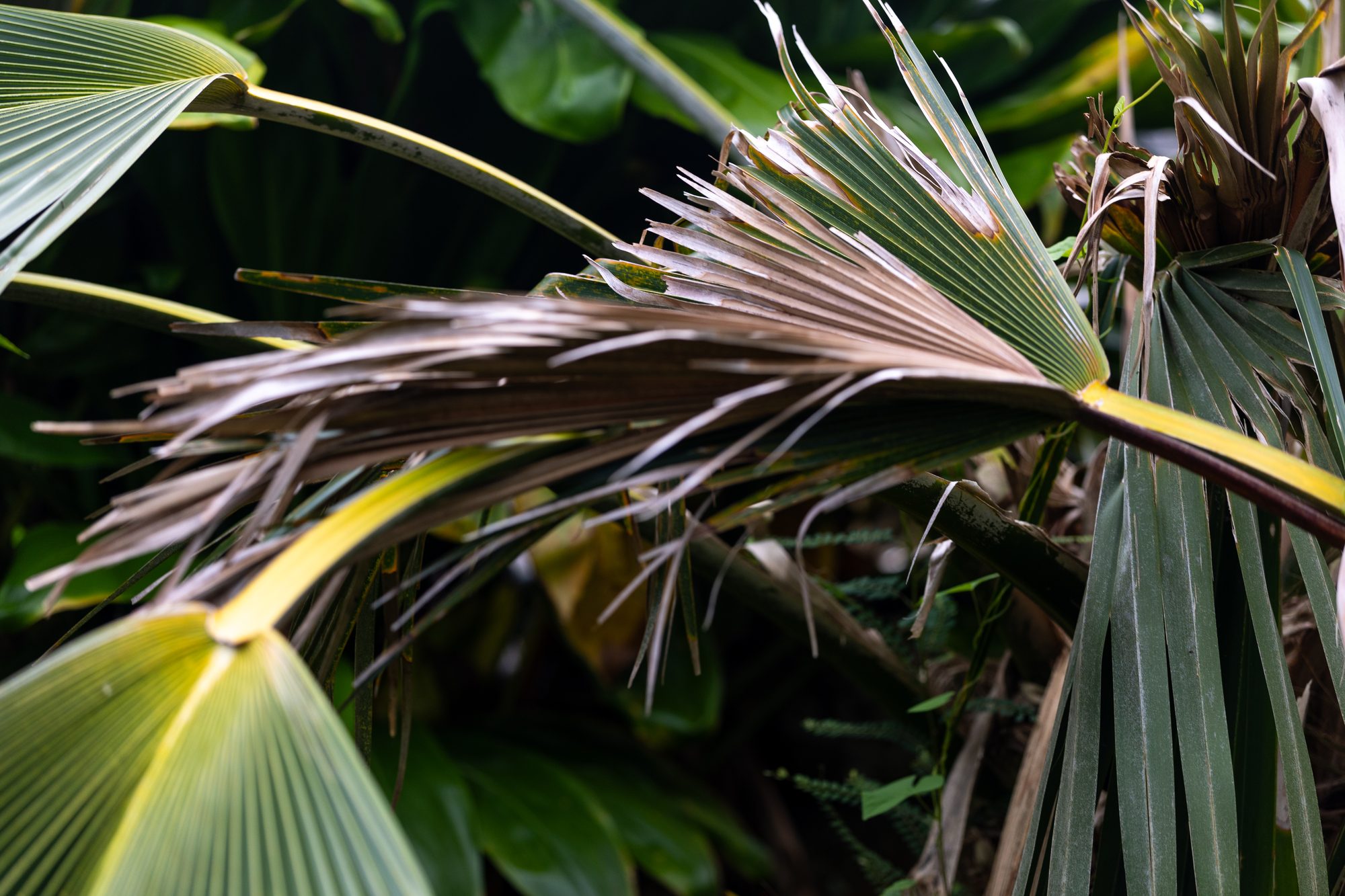
Loulu, Hawaiʻi’s only native palm, and some species such as Pritchardia kaalae, were already critically endangered before coconut rhinoceros beetles were discovered in Hawaiʻi.
The CRB-related destruction among Hawaiʻi’s coconuts has dominated headlines, but Barboza said the situation with loulu deserves just as much attention, if not more, because coconuts can be replaced from other populations around the Pacific.
“Once our loulu species are gone, we have 23 different endemic species, we can’t replace them,” he said. “Most species of loulu are endemic to each island and only a few cross over to other islands.”
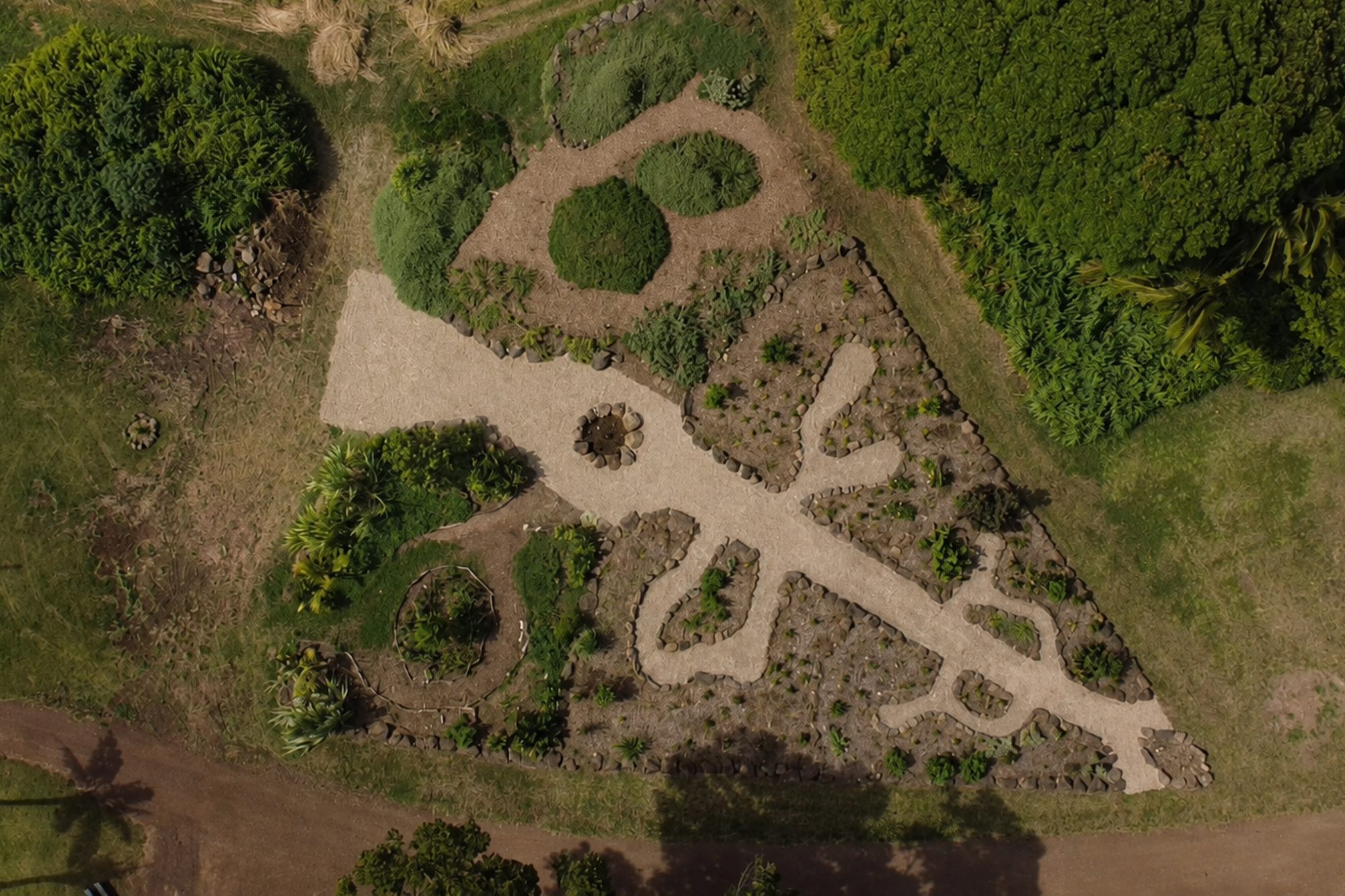
Conservationists in different ahupuaʻa across Oʻahu are cultivating their own unique path to bring native plants back. The Kōkua Learning Farm’s native Hawaiian plant garden is one example of growing a locally rooted ecosystem.
Hui Kū Maoli Ola recently contributed to a native Hawaiian garden landscape design project at the Kōkua Learning Farm in Haleʻiwa on Oʻahu’s North Shore.
The nursery and its collaborators designed the garden to form a kalo (taro) leaf shape. The farm is a hub to teach the next generation about native ecosystems and sustainable farming.
Photo provided by Kōkua Hawaiʻi Foundation
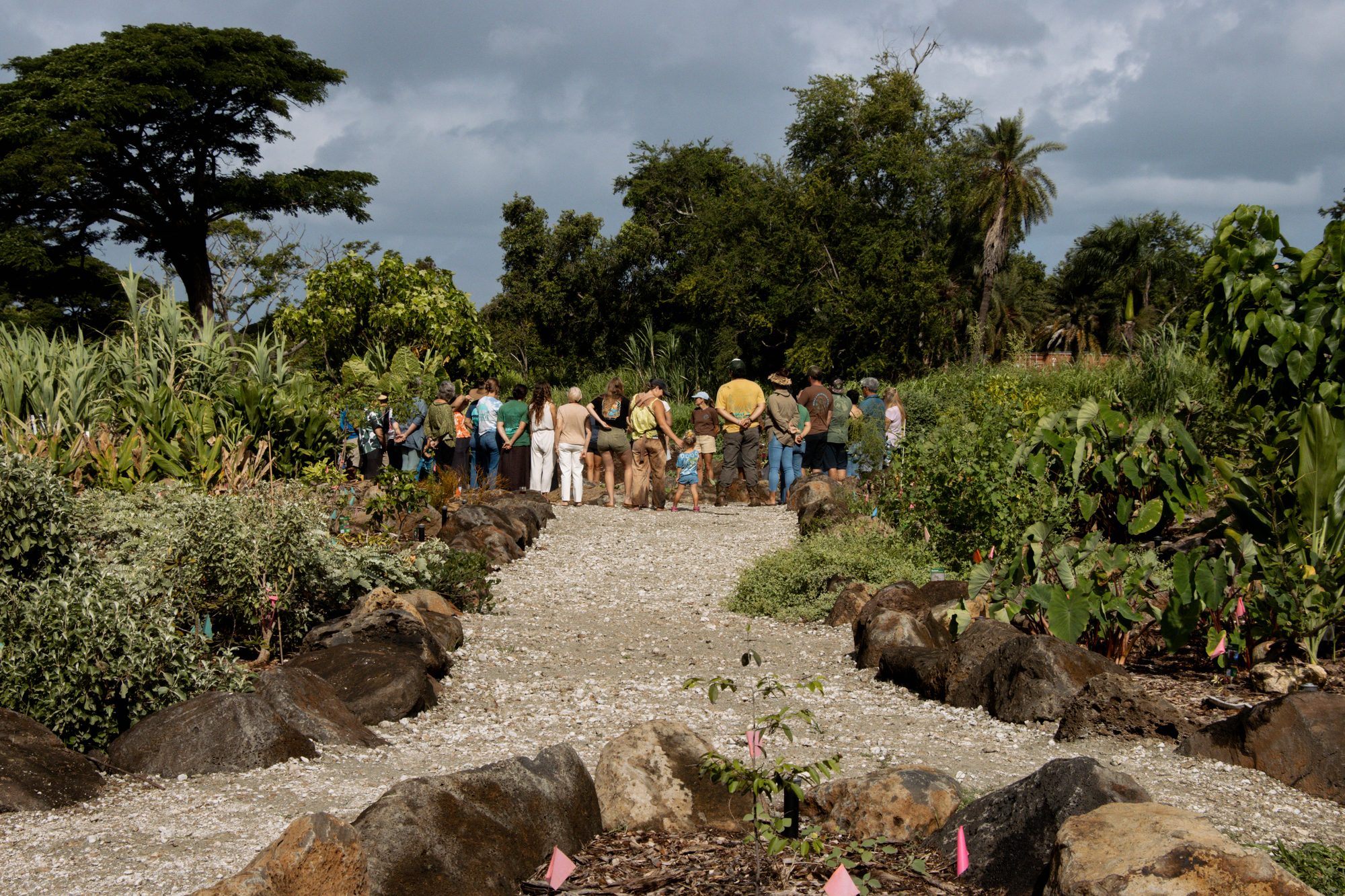
The Kōkua Learning Farm’s Hawaiian Garden has six different zones that correspond to different native plants and their ecosystems.
Photo provided by Kōkua Hawaiʻi Foundation
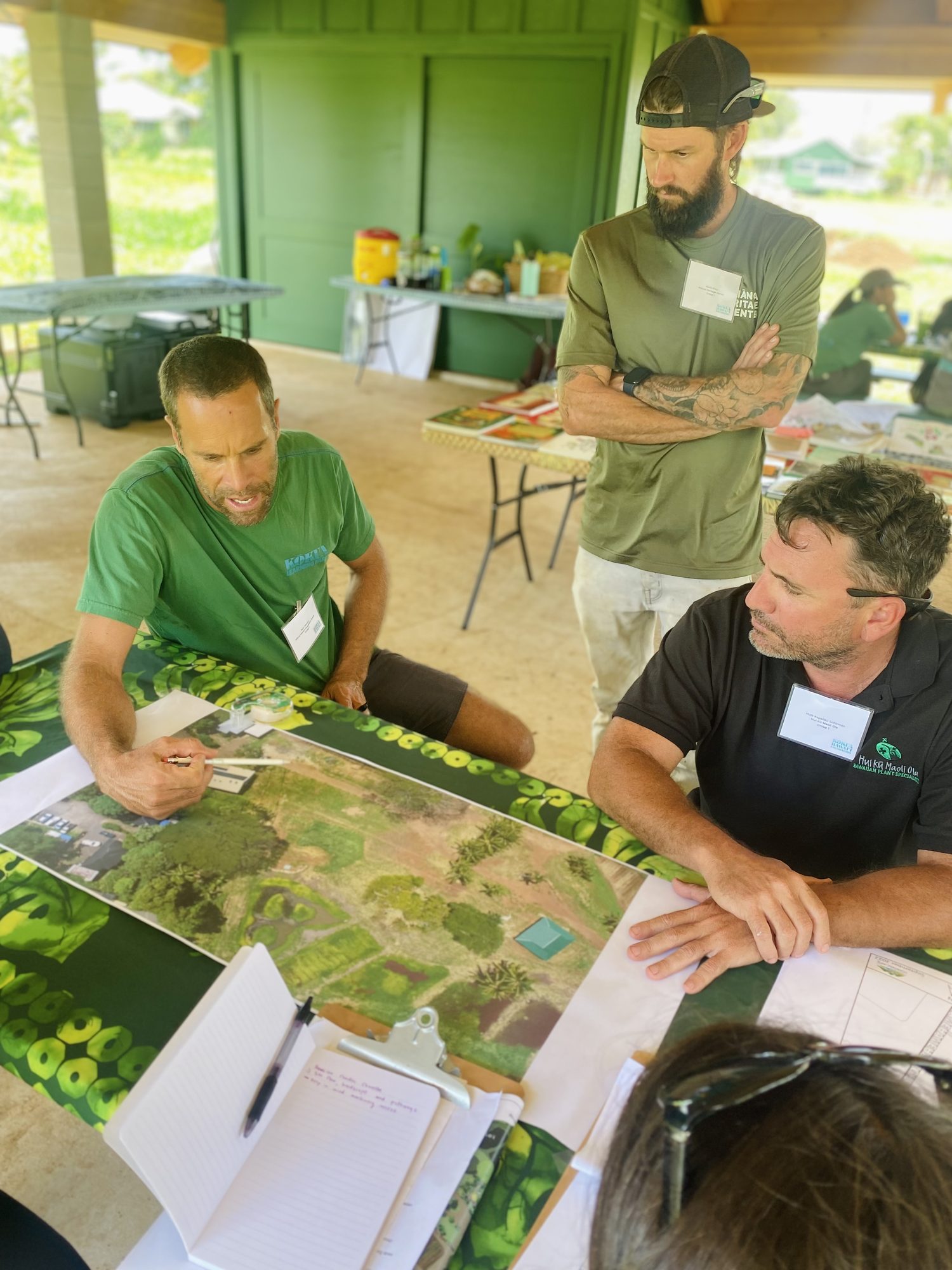
Kōkua Hawaiʻi Foundation Co-Founder Jack Johnson, Mānoa Heritage Center Facilities Manager Kevin Prior, and Hui Kū Maoli Ola Co-Founder Matthew Kapalikū Schirman discuss plans for the Hawaiian Garden at the Kōkua Hawaiʻi Foundation’s Learning Farm.
The garden was designed through a group charrette process including experts from Hui Kū Maoli Ola, Mālama Pūpūkea-Waimea, Mālama Loko Ea Foundation, Waimea Valley, the University of Hawaiʻi at Mānoa College of Education, Mānoa Heritage Center, and Wolf Landscape Architects.
Photo provided by Kōkua Hawaiʻi Foundation
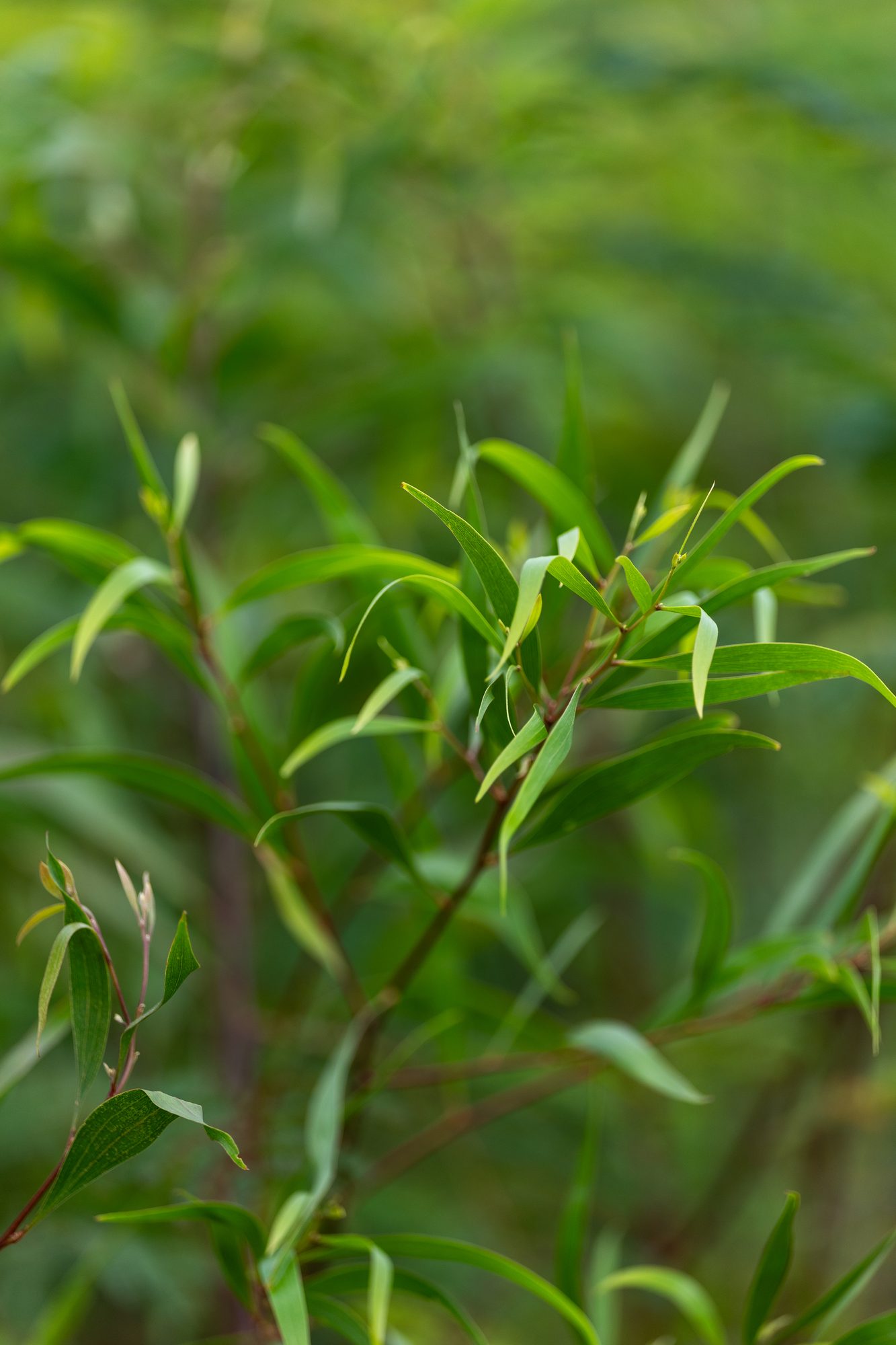
Found only in Hawaiʻi, the koa tree is critical to a healthy Hawaiian watershed. It enriches soil and shelters native wildlife. Planting more of it could encourage other native plant species to grow in its understory.

The brilliant red blossoms of a thriving ʻōhiʻa lehua tree soak in some sunlight at Papahana Kuaola.
The resilient ʻōhiʻa is among the first plants to grow after a lava flow, but a fungal disease called Rapid ʻŌhiʻa Death has seriously threatened the species, particularly on Hawaiʻi Island and Kauaʻi. More than a million trees on Hawaiʻi Island and 1,000 trees on Kauaʻi have died since it was first detected in the Puna District of Hawaiʻi Island about 15 years ago, according to the state Department of Land and Natural Resources.
In the summer of 2026, the state began using a new tool to prevent the spread of the disease: a biodegradable paste-like beetle repellent that can be deployed with a caulking gun.
In an effort to discourage the spread of the disease, some groups have discouraged its use for lei and hula costume making, but Barboza fears that could lead to the loss of collective cultural knowledge, including leimaking.
“People get so comfortable using something outside that they don’t even know what is here,” he said.

Barboza walks through the restored kalo loʻi at Papahana Kuaola. By re-establishing native plant borders, Hui Kū Maoli Ola, Papahana Kuaola and their partners are building a native ecosystem again.
Beyond the obvious benefits of restoring habitats for Hawaiʻi’s native animals, restoring native forests and removing invasives is also showing to be a proactive and money-saving method to mitigate urban flood damage, according to a recent May 2026 study from the University of Hawaiʻi.
Residential homes are an easy place to start, Barboza says, and using a mix of native trees and plants can help properties handle changing weather and rain patterns. Since its inception, the nursery has landscaped more than 60 residences and 15 large commercial properties.
“Once we get more and more homes with native plants, then the stepping stones between native plants become smaller and smaller, and before we know it, we have a healthy ecosystem that we are just a part of,” he said.
Hui Kū Maoli Ola is one of the organizations operating in the Heʻeia ahupuaʻa. This article is part of a series exploring place-based knowledge as a climate solution. This article is funded in part by a grant from the Solutions Journalism Network’s Climate Beacon Newsroom Initiative.
Photography Zak Noyle · Words Eleni Avendaño · Additional photos provided by Rick Barboza and Kōkua Hawaiʻi Foundation
This photo essay is part of Hawaiʻi Community Journal’s solutions-focused coverage of people and places across the islands.