This article is co-published with Hawaii Business Magazine as part of our ongoing series: Hawaiʻi’s Water Crisis.
Norman “Bush” Martin, Jr., Ke’anae resident and member of Aha Wai O Maui Hikina, East Maui Regional Community Board, says when it comes to water, there’s enough to go around.
“It’s how you manage ’em,” he said.
Martin Jr. had just left a recent board meeting in Wailuku on Friday, where he and several other East Maui residents braved the aftermath of the recent storm to discuss everything from stream flow amounts to last year’s controversy surrounding a proposed 30-year water lease for agricultural company Mahi Pono.
Upon leaving the county building where rain fell steadily from the sky, the former county employee and taro farmer said it’s moments like these that serve as a reminder to all.
“We’re getting 400 million gallons a day with this kind of weather,” he said.

Norman “Bush” Martin, Jr. departs meeting on March 20th. | Megan Moseley for HCJ
But according to Martin Jr., it’s not only a matter of how much water is being used, but also for what purpose.
“For us, we know there’s no drought. They create the drought,” he said.
He added, “There’s more than enough; it’s just nobody would police them,” he said regarding the East Maui Irrigation System (EMI).
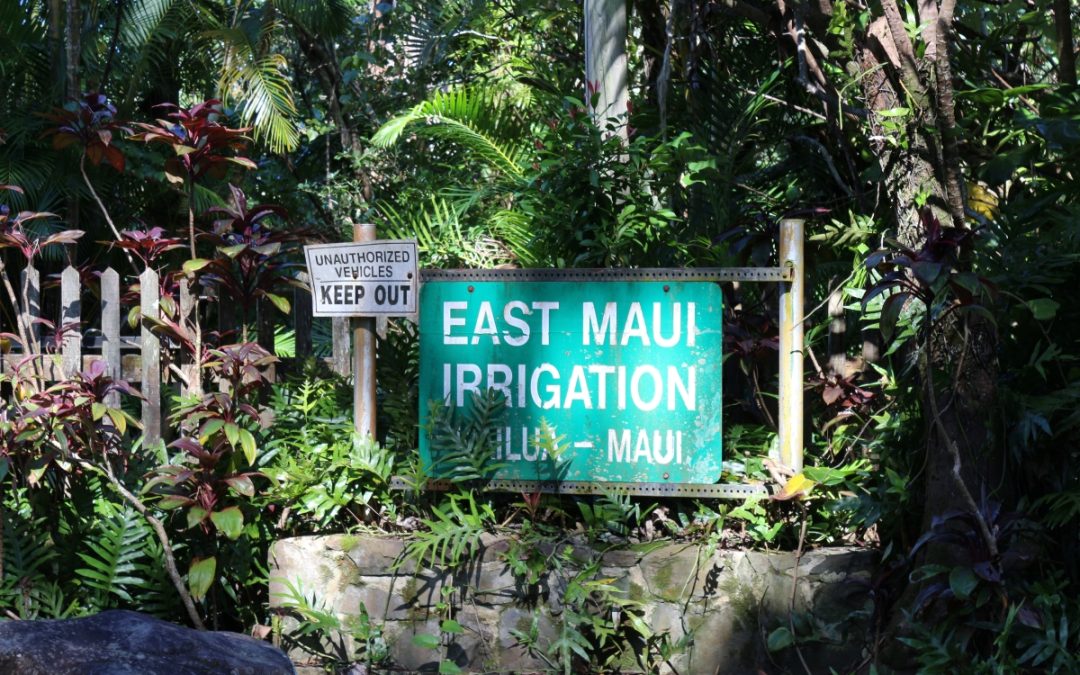
Previously owned and operated by Alexander & Baldwin (A&B) for about 150 years, the system was created to support Hawai’i’s growing sugar plantation industry, diverting millions of gallons a day from the historic eastside.
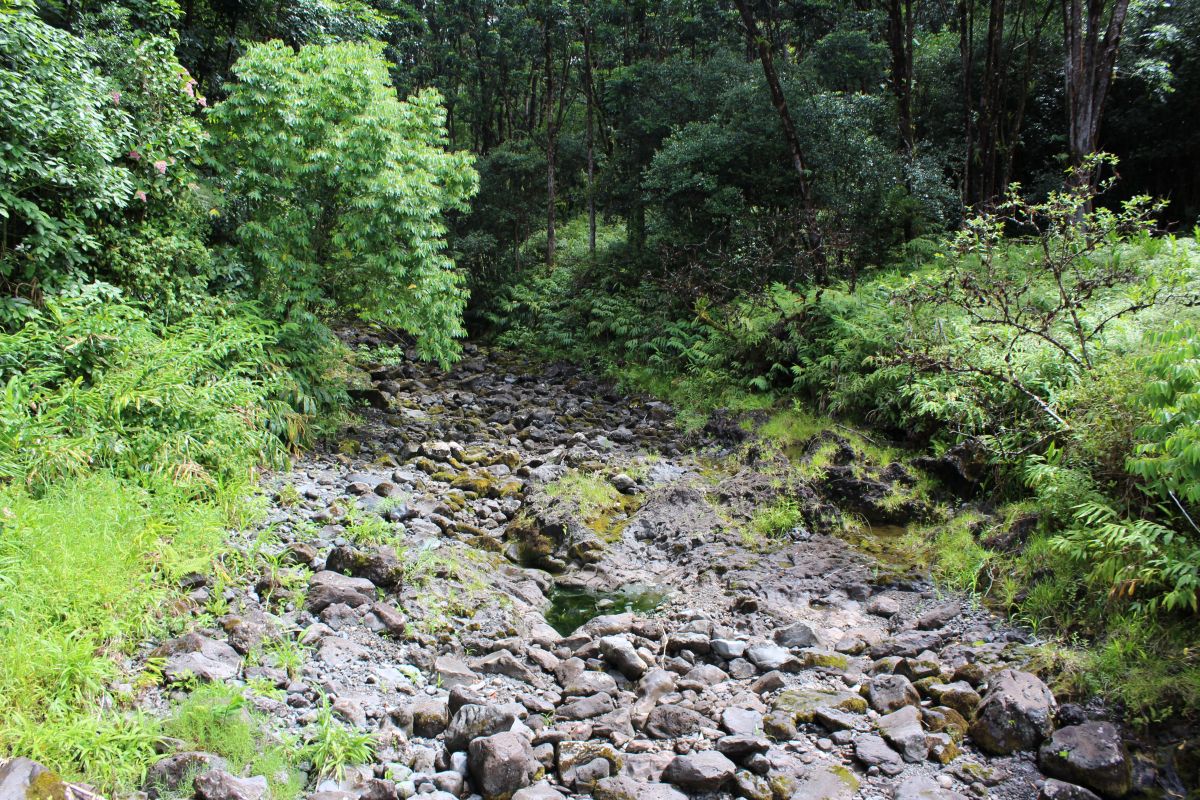
But when growth exceeded capacity, by the 1980s, East Maui kalo farmers and environmental groups began a mission to reduce EMI diversion amounts and restore streamflows.
With a history of taking too much, leaving taro farmers with little to no support for their kalo crops, and adversely impacting surrounding ecosystems, residents are now watching every move and every drop, while diligently working with local authorities to regain oversight amid outside interests that persist.
Mahi Pono, an agricultural venture funded by the Canadian Public Sector Pension Investment Board, acquired 41,000 acres of former A&B sugar land in 2018. Last year, the company gained full ownership of EMI through a surprising agreement that ended A&B’s 150-year oversight.
Currently, local authorities are discussing taking complete control of the century-old water system, but that effort is not without its challenges. Issues of upgrades, oversight, and legal debates continue as the recently established board moves forward, hoping that one day the state will grant the County of Maui authority once and for all.
Director of the East Maui Regional Water Authority, Gina Young, said earlier this month that since being elected in 2022, the entity has continued on its path toward long-term management of the East Maui water system.
The department is in the process of developing an Integrated Water Resource Management Plan, which she describes as “a new approach with Maui County in control of local water resources and proactive management of our watershed centered on community-led governance through the EMWA Board, the integration of Native Hawaiian intelligence, and local watershed operations that benefit watershed communities.”
The department also continues its outreach efforts, she said, including a grant program and a community conversation series held in June and October of last year in East Maui locations. During those meetings, participants vocalized the urgent need for accountable, local control, proper stewardship of East Maui water resources, and proactive infrastructure upgrades to improve system efficiency. (The next community meeting will be held in Ke’anae on April 1 from 5 p.m.-6:30 p.m.)
Efforts are also underway to finalize the department’s budget. The proposed FY 2027 budget for EMWA is around $1.4 million, with a focus on areas such as operations, legal expenses and planning. Some allocations include $375,000 for East Maui Irrigation system maintenance, $325,000 for strategic planning, and $150,000 for specialized water rights counsel.
The final budget will be released today (Wednesday, March 24) with an emphasis on funding for the East Maui baseyard.
At the center of the East Maui water system controversy is the setting of streamflow levels and a 30-year lease, which draws public criticism year after year.
During Friday’s board meeting, members addressed the issue following a recent ruling in the Hawaiʻi Environmental Court on March 6 that temporarily decreased the amount of stream water that can be taken from East Maui by around 5 million gallons per day.
The ruling came after the state land board issued Mahi Pono a permit allowing the diversion of over 35 million gallons per day (mgd) from East Maui’s streams, more than 50% above the amount Mahi Pono diverted the previous year.
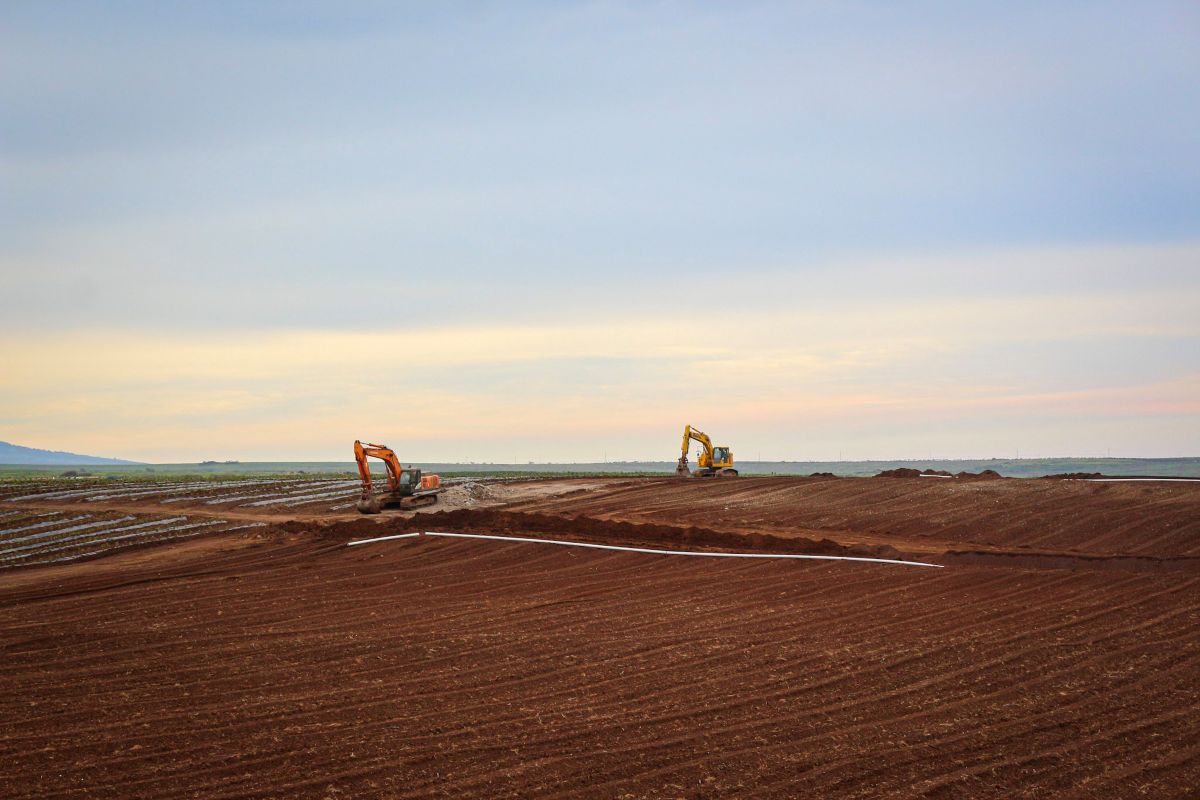
Heavy equipment operators are pictured here on Mahi Pono fields alongside Haleakalā Highway on Maui. | Megan Moseley for HCJ
The court’s ruling now reduces the amount of water that can be taken from East Maui to 30 million gallons per day, which will not impact the amount of water delivered to Upcountry Maui, and allows Mahi Pono to continue its agricultural operations in Central Maui.
Last year, the Sierra Club of Hawai’i and Nā Moku ʻAupuni o Koʻolau Hui asked the state land board to hold a contested case on Mahi Pono’s stream diversion permit, but they were denied. The Sierra Club and Nā Moku filed separate appeals of the Land Board’s denial of the contested case request.
After hearing an update on the issue during Friday’s meeting, Kyle Nakanelua, vice chair of the board, asked why there appear to be difficulties getting everyone on the same page.
“We’re not aligned with them, or they’re not aligned with us? We’re trying to manage this whole water resource, and it seems like we have all this opposition going on toward a smooth, continuous flow, ya?” he said.
Mariana Lowy-Gerstmar, legal representation for the Maui County Department of Water Supply, who discussed the recent ruling during Friday’s meeting, said that many of the decision-makers and lawyers are on or are from Oahu, which may influence understanding.
“That’s a reality – I don’t know how much they know about what’s going on with the county and what are their the needs,” she said.
Jonathan Likeke Scheuer, chairman of the EMWA board, also noted the miscommunications and challenges surrounding the county’s grassroots effort.
“Just reminding everybody that we survived three assassination attempts during this time. Three times, the Board of Land and Natural Resources tried to quickly start the process of giving a 30-year license to Mahi Pono and making our entire effort impossible to succeed,” he said during the meeting.

East Maui Regional Community Board meeting March 20th. | Megan Moseley for HCJ
The State, County, EMI Relationship
Scheuer reads from a 1961 resolution of the Maui County Council requesting a delay in issuing a water license.
“Because the way they were issuing water licenses was putting the county at a disadvantage,” he explained.
Legal agreements regarding the EMI system have been in place since the 1870s, he explained, including long-term licenses and leases that lasted all the way to the 1980s.
Over time, that system has expanded, being built mainly on state land under these agreements, he said.
“They own some land in East Maui, and water comes off their land and into the ditch,” he explained while referring to a chart pointing to about 5.5 million gallons of surface water per day coming from that area. But the majority of the water being asked for is coming from the state-managed area, he said.
Currently, in the water license they’re seeking, Mahi Pono is requesting an average of up to 85 million gallons per day.
“They can’t do much farming without the water coming off state lands,” he said. “They’re heavily dependent on water coming off of state lands.”
The question of who owns EMI often comes up, he explained, and reads from another paragraph regarding a Huelo license that says, “Upon the termination of this license by the elapse of time, or any other cause…all improvements, now or hereafter erected on the license area, including the whole of such aqueduct systems and all extensions of improvements made thereto, go to the lessor.”
Scheuer explains that essentially, what that legal language alludes to is that the ditch system is under the jurisdiction of the state.
“East Maui irrigation built the system, but everything that’s not on their lands is not their property. They have a right to use it under the revocable permit, but whose property is it? It’s the state’s,” he said.
Beginning in 1938, under an agreement with the then-territory of Hawai’i, EMI has allowed the movement of water back and forth across state lands, but what is built there is a different matter.
“Imagine you own your house, but I own the driveway,” he explained.
“Can the county acquire the system? The vast majority of the water and the vast majority of the infrastructure are either directly owned by the state or the state has the right to transfer water across East Maui Irrigation’s private property. The only section that is clearly owned just by Mahi Pono is, we’ll call it the driveway.”
Moving forward, the County of Maui could gain control over the area if the state pursues a “government set-aside” via an executive order, which is currently being discussed in a proposed House resolution.
“The state can set aside all its interest in the irrigation system and all its rights to cross private lands and the irrigation system,” he said.
As for the portion owned by Mahi Pono, he said they could negotiate an acquisition, or, in more extreme cases, acquire it through condemnation.
“What do they really own? They own the driveway,” he said.
In terms of evaluating the system’s price, there are a few ways to assess it, Scheuer said. One way might be to evaluate the cost of replacement – what would it cost to build EMI now? Another might be the underlying real estate value and how much that would be worth, but since some areas are on conservation land without infrastructure, that would greatly influence the price.
“Because of the endangered species on them, and other things, tend to be something that costs money to own to protect…” he said
Another way to assess its value might also be based on the previous transactional agreements between Mahi Pono and A&B, which Scheuer argues, based on those previous transactions and understanding there might be an investment needed to ensure the system lasts for the next 100 years, “the cost of the system might actually be 0.”
Grant Nakama, vice president of operations at Mahi Pono, said they are now working “collaboratively with all involved stakeholders as discussions about East Maui water management move forward.”
Young also said her department is building partnerships with agricultural stakeholders and the State on these issues.
“Management by the County of Maui allows for perpetual support of Central Valley and Upcountry agriculture and food security, water to Upcountry residents, as well as water for fire mitigation,” she said.
Scheuer added:
“The Aha Wai O Maui Hikina has been really consistent all the time at saying we want agriculture in Central Maui to succeed, we want water to go to Upcountry, we want water to go to the county…everybody wants to keep the water flowing.”
“We want Mahi Pono to succeed; we just want them to be the county’s customer.”
Recycled Water
Another potential solution to help offset water diversion amounts may be exploring recycled or greywater.
According to the county, 22% of the islands’ wastewater is recycled and reused for landscape irrigation, golf course irrigation, agricultural irrigation, fire control, and construction dust control.
Nakama said the company is currently exploring R-1 water.
“With respect to recycled R-1 water, Mahi Pono continues to evaluate potential opportunities where it may be appropriate and feasible for agricultural use, consistent with Department of Health guidelines and available infrastructure,” Nakama said.
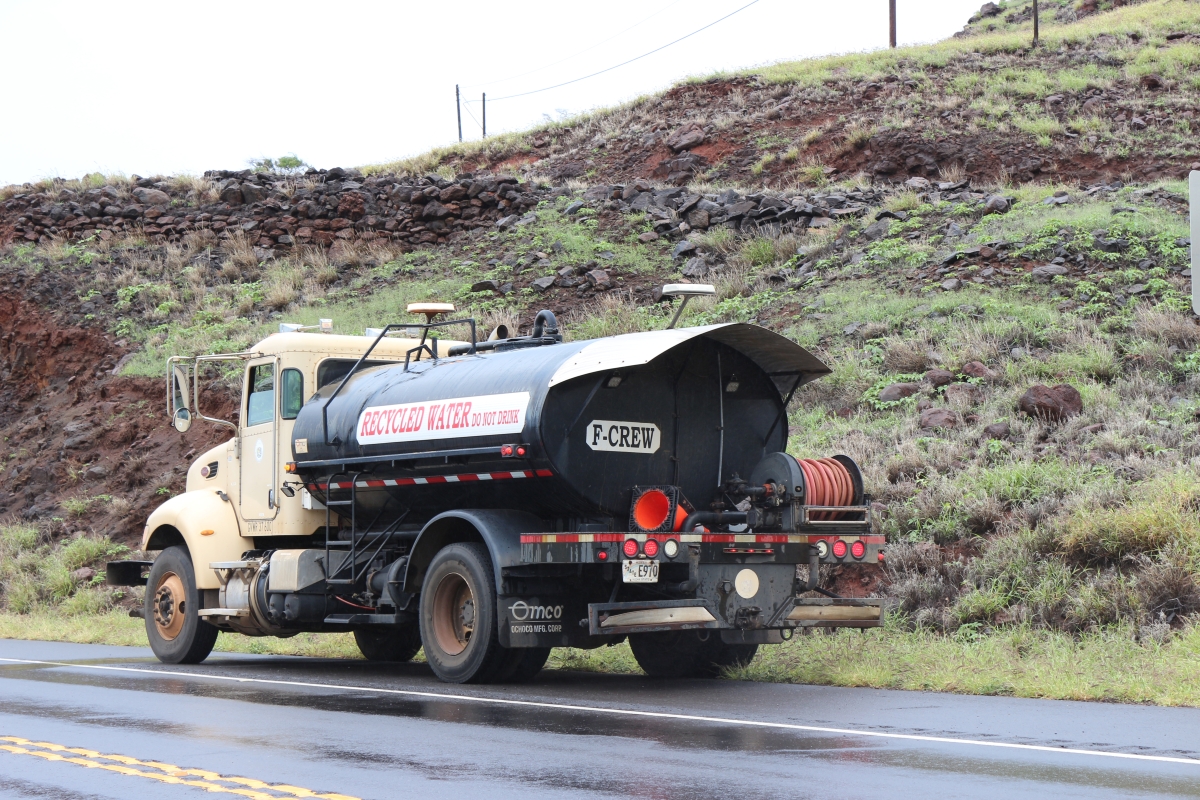
A recycled water truck is seen here on the highway heading to West Maui. | Megan Moseley for HCJ
But Scheuer is not so optimistic.
“Mahi Pono, in the water license they are seeking, is seeking up to 85 million gallons of water per day,” he said.
According to previous reports, the county has limited capacity for R-1 production. There’s also the challenge of restrictions for agricultural use and transportation, as the treatment plant is on the west side of the island.
“R-1 is potentially useful for sure, at reducing pressure on East Maui, but it’s not at the volume,” he said.
According to previous reports from the Maui County Department of Environmental Management, from 2010 to 2021, the department has expended about $47 million in R-1 and reuse.
From 2022 to 2024, the department expended about $69 million, and has plans to invest $93.5 million in R-1 reuse over the next several years.